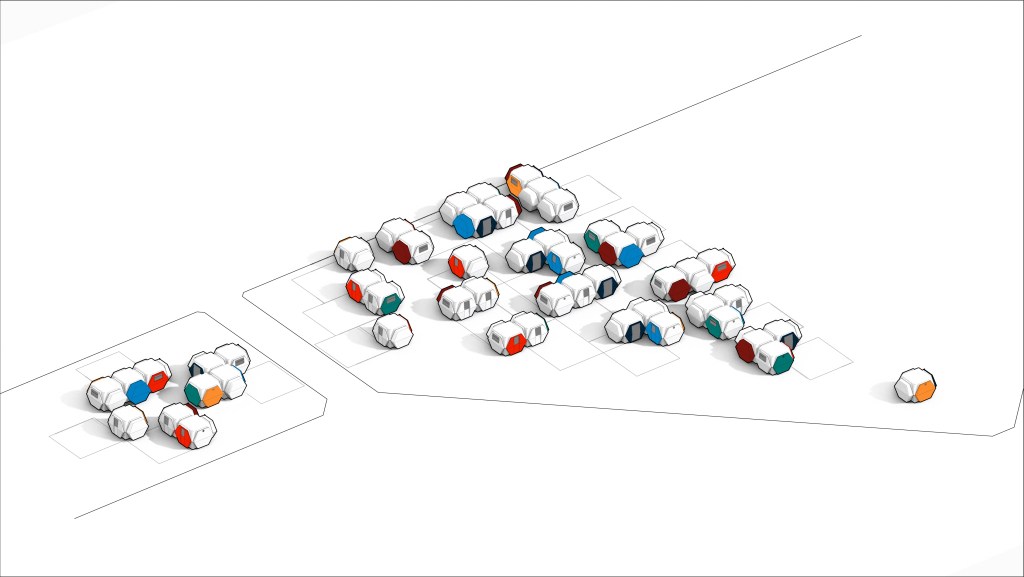
Between 1968 and 1975, Georges Candilis and Anja Blomstedt conceived the Hexacube, a plastic cell targeting mass tourism, first shown in Le Barcarès-Leucate, France. Both a work of architecture and an industrial product, it was efficiently designed as a purchase item. The proposal, however, was scrapped after the first oil crisis in 1973. The pictures illustrating this particular work, from its inception to its completion, hold a symbolic component allusive to both its distinctive socio-cultural context and the means of representation and dissemination of architecture then at play. From this point of view, our research is set to analyse a series of graphic documents preserved at the Centre d’Archives d’Architecture Contemporaine in Paris, focusing on the design process, the technical development and the press coverage of this iconic item.
“Una iconografía del turismo de masas: tres modos de representación en el Hexacube de Georges Candilis y Anja Blomstedt / An iconography of mass leisure: three modes of architectural representation in the Hexacube by George Candilis and Anja Blomstedt,” with Miguel Ángel Navarrete Santana. EGA 52 (2024): 100-113.
 raulcastellanosgomez.com